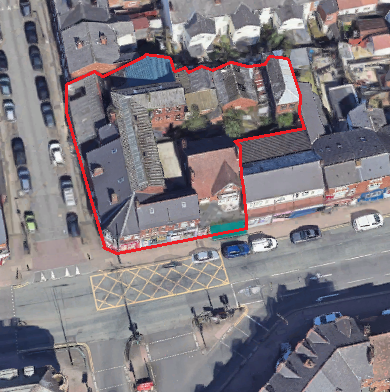


Located in a semi-rural locale, the previously abandoned Neach Hill House was acquired for the purpose of renovating the once great manor house. The project includes the renovation and modernising of the main manor house, the conversion of stable houses to a grand hotel, and the development of a new residential estate.
Our team at Civia was introduced to the project to meet the drainage needs of the site, including an assessment of the flood risk to the site and exploring the different SuDs options available on site. The site itself was apportioned between Neach Hill House’s estate to the north and the proposed residential site to the south, as well as addressing the drainage design of a long access track through densely vegetated woodland.
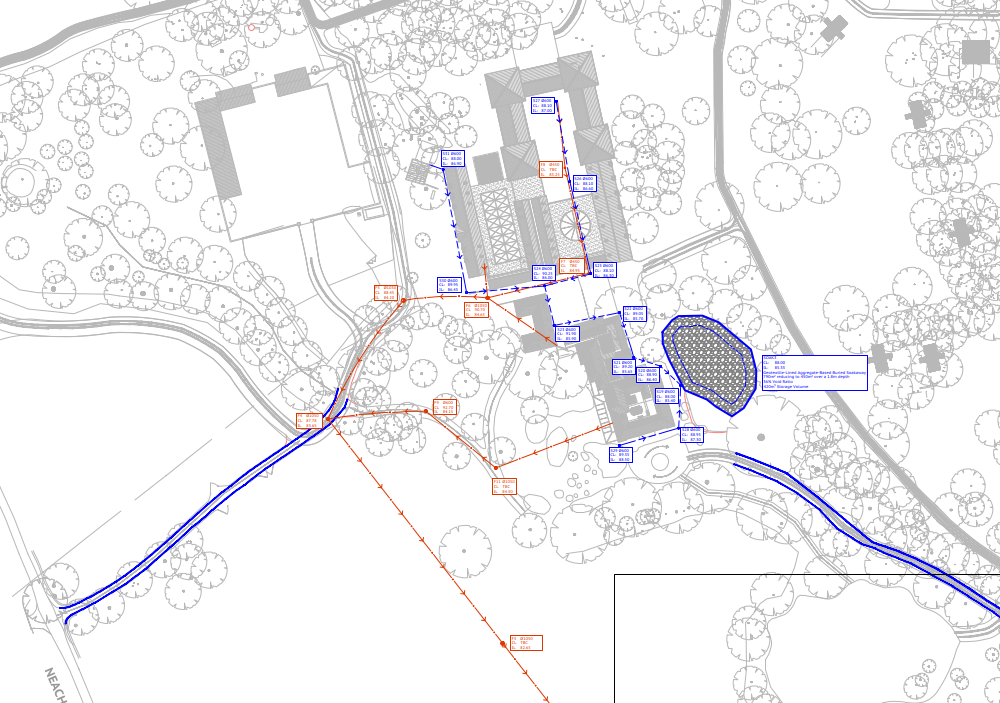
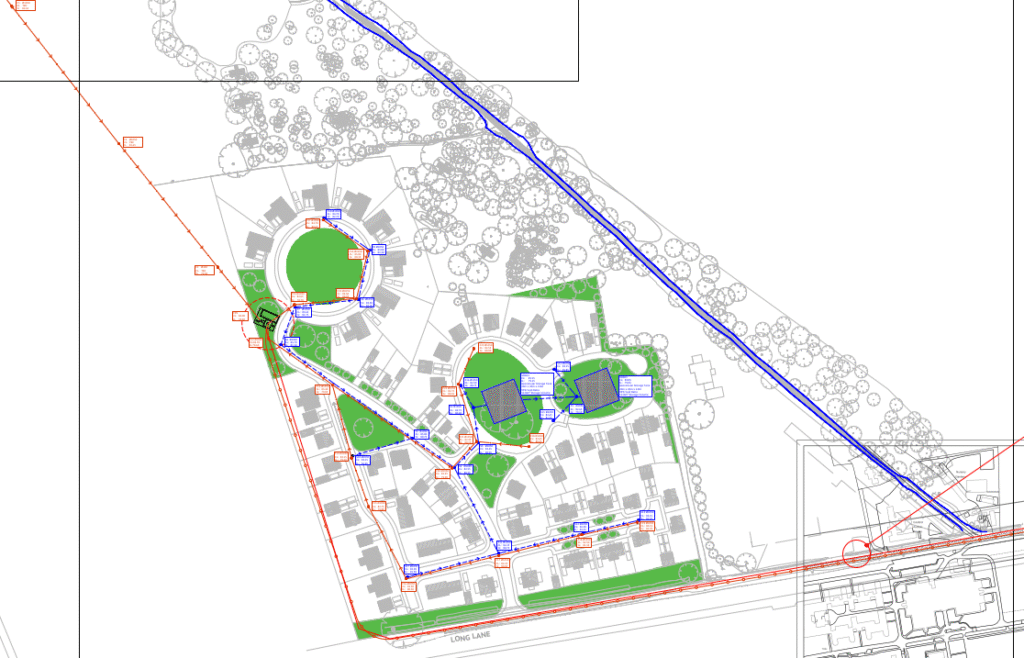
Due to limited access to watercourses and sewers, it was proposed to manage all surface-water on-site for both phases. The 58 dwellings was proposed to drainage to communal area soakaways; the Neach Hill estate to drain into a historical pond repurposed as a buried aggregate-based soakaway; and the access roads into roadside french drains.
The foul drainage was proposed to be connected between the two phases to a proposed foul pumping station compound, discharging to existing sewers on Newport Road 1km to the east.
Get in Touch
Inspired by this case study and want to learn how Civia can make your next project a success? Contact us today.